Who writes and checks these questions
Three doctors, in two states. One writes every question from the guideline it rests on; the other two read them as practising public health physicians before they are trusted.
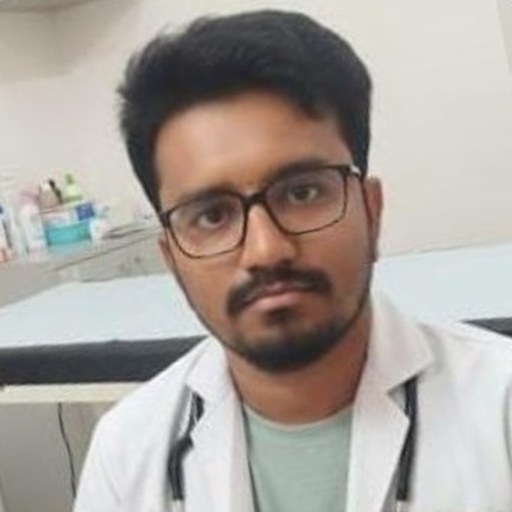
- District Epidemiologist for Coimbatore, with an MPH from the ICMR National Institute of Epidemiology, Chennai. The questions are written from the guidelines he answers to at work, not from a textbook he read once.
- Runs a district's daily disease surveillance — the fever and dengue line lists, cluster detection, the hotspot maps and the epidemic situation alert that goes out every morning.
- Works on One Health as well — leptospirosis, scrub typhus, rabies, avian influenza: the diseases that cross between animals and people, where a human case is usually the last warning you get.
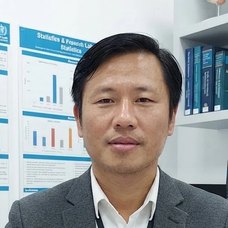
- Fifteen years in government health services in Arunachal Pradesh — CHC Balijan, Medical Officer In-charge at UPHC Itafort, and Medical Officer for tuberculosis control.
- Urban Health Coordinator for the National Urban Health Mission, and a National External Assessor for NQAS, assessing health facilities against the national quality standards.
- MPH from the ICMR National Institute of Epidemiology, Chennai, and a postgraduate diploma in public health management from PHFI, New Delhi. Investigated the Longding measles outbreak in 2025, and was awarded the State Commendation by the Governor of Arunachal Pradesh in 2020.
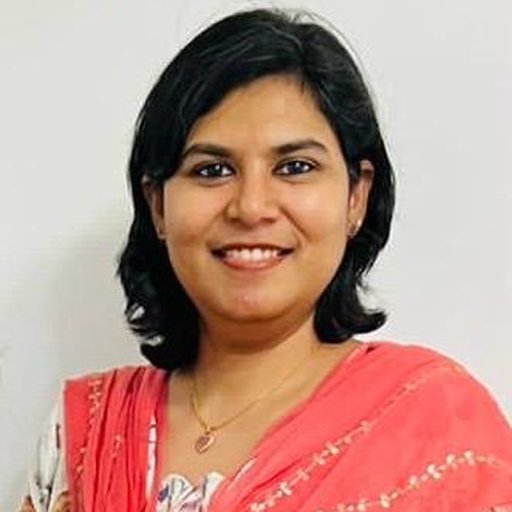
- Trained in field epidemiology through India's FETP-MPH at SCTIMST with the ICMR National Institute of Epidemiology. Led the outbreak investigations of scrub typhus in Andhra Pradesh and hepatitis A in Tamil Nadu, and worked on a community scrub typhus serosurvey.
- Medical Officer with the Tamil Nadu Health Systems Project, helping roll out cervical and breast cancer screening across 270 hospitals and about 1,600 PHCs. Ran National AIDS Control Programme work for migrant workers and key populations from 2008 to 2015, with a NACO appreciation for Sivaganga district.
- Taught pathology to MBBS students at ESIC Medical College, and ran preventive health screening at SIMS Hospital. MBBS from Madras Medical College.
1. Twenty-five questions a day, one on the screen at a time, about a minute each. Take 10 now and 15 later if that suits the day better.
2. Answer, and see at once whether you were right — why the right answer is right, why the one you picked was not, and the exact line of the guideline it rests on.
3. You are marked only on what you answer, so stopping early costs you nothing.
4. A rolling 7-day board ranks on accuracy, so every week starts fresh — and a belt builds from every correct answer you have ever given, white through to black.
The daily 25 is a ceiling, not a target. Grinding for an afternoon is not what keeps a guideline in your head; ten minutes tomorrow is.
Sources are ranked, and the ranking is not a detail:
1. Government of India — national programme guidelines, NCVBDC, NTEP, NHM, IDSP.
2. WHO — where the national guideline is silent.
3. CDC — last, and labelled as US context.
Where they disagree — and on dengue fluids they do — the Indian guideline wins and the question says so. Every answer carries its citation so you can check us.
Every question is written by hand, from Government of India, state and WHO documents. None is generated and left unread, and none ships without its source.
Then, before it can reach you, it has to pass in this order:
1. The citation. Every figure in the quoted line must actually appear on the page it cites, in the source document itself. Checked by machine, not by eye.
2. The key. Two AI models answer it blind — shown the quote, the vignette and shuffled options, never the answer — and both must agree, and must say the quote settles it. A disagreement sends it back.
3. Your report. Every question has a flag button. A reported question is read again against the source.
Reword a question and both checks lapse; it cannot ship until they are done again.
Sign in with Google, then tell us your state and what you do. A nickname is optional — use one and that is all the board ever shows. No senior has to appear publicly below a junior.